Waymo's driverless taxis are becoming a routine presence in a growing number of American cities, shifting the public debate over autonomous vehicles from distant possibility to daily experience. The company now operates a fleet of more than 4,000 cars across 15 US cities and has identified Washington, New York, London and Tokyo as expansion targets.
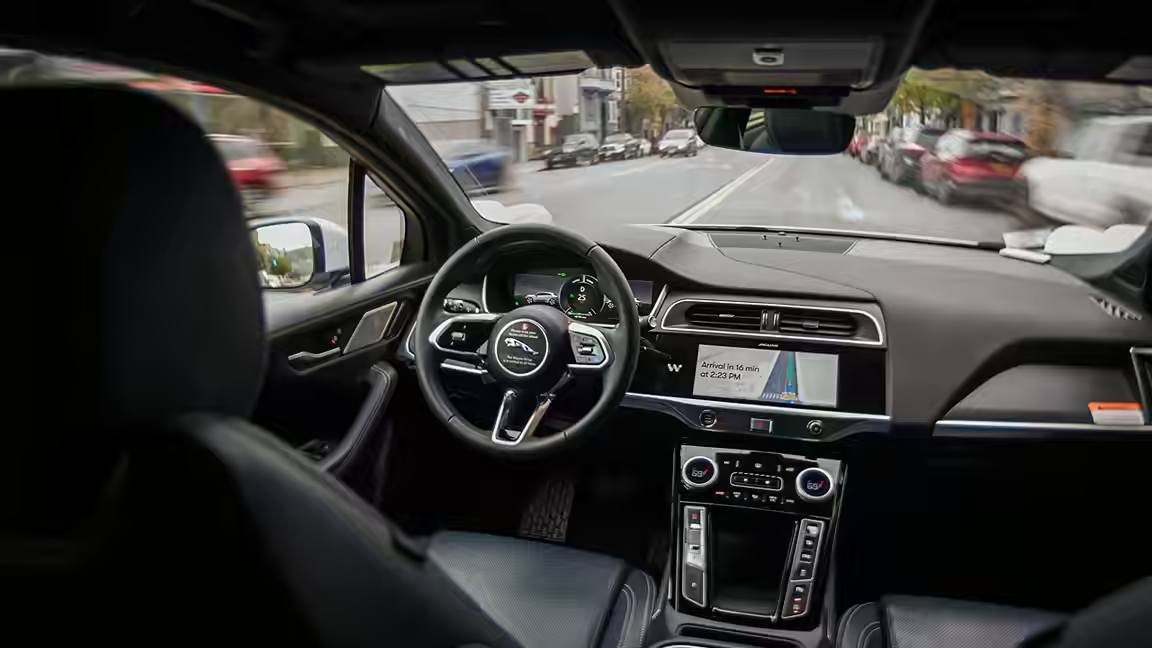
San Francisco offers the clearest view of that transition. More than 1,300 Waymo vehicles operate in the region, and the company has recently moved ahead of Lyft in local market share. Riders enter familiar-looking cars equipped with cameras, sensors, detailed maps and machine-learning systems, but no person occupies the front-left seat. The steering wheel still turns as the vehicle maneuvers.
That wheel is partly a consequence of safety rules written around conventional cars and partly an element inherited from Waymo's history of adding autonomous systems to existing vehicle designs. The company has also found that its movement can reassure passengers. Megan Neese, Waymo's head of insights, said riders viewed the turning wheel as evidence that familiar driving actions were continuing, even though software rather than a person controlled them. Windshield wipers similarly serve passengers because the automated driving system does not need a clear view through the glass in the human sense.
The interface illustrates a broader product challenge. Driverless vehicles must behave differently enough to deliver automation while remaining legible to passengers and other road users. A moving wheel can look uncanny, but it also communicates steering in a form people already understand. Waymo's sensor dome and empty driver's seat make the technology conspicuous on the street, giving residents a visible object on which to focus wider hopes and fears about artificial intelligence.
Waymo is promoting safety as the core reason for that change. Its first national advertising campaign, introduced in June, emphasized that automated systems do not become tired, angry, distracted or impaired. The campaign said Waymo vehicles were ten times safer than human-driven cars, a company claim that has become prominent in its marketing. The supplied evidence does not independently assess that figure, so it remains an assertion from Waymo rather than a settled comparison.
The company traces its origins to research accelerated by US government driverless-vehicle contests in 2004 and 2005. Google later hired researchers associated with successful entries, and their work evolved into the system Waymo now calls the Waymo Driver. What began with experimental vehicles has become a commercial transport network operating alongside taxis, ride-hailing services and private cars.
Scale changes the questions cities face. The issue is no longer only whether an autonomous car can complete a route, but how thousands of such vehicles fit into streets designed around human behavior. Passengers must learn what the system is doing without a driver to explain it, while pedestrians and motorists interpret vehicles whose decisions come from sensors and software. Waymo's growth makes that adjustment an active civic experiment, one ride and intersection at a time.