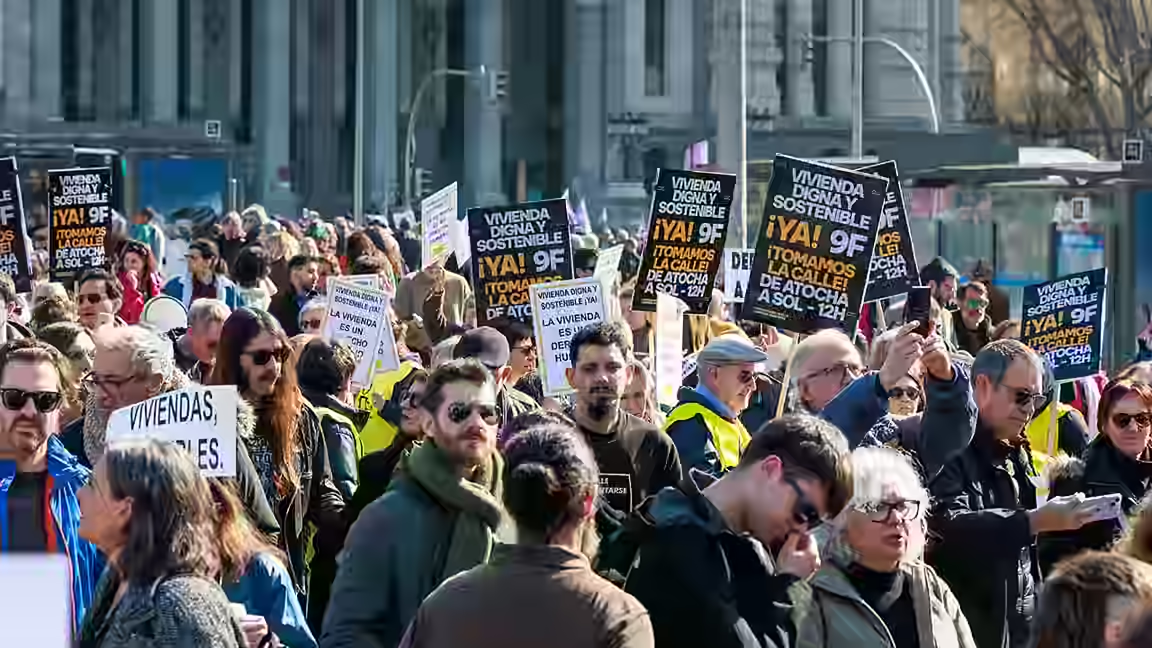
Tens of thousands of people marched in Madrid and other Spanish cities after parliament rejected government proposals intended to address rising housing costs and evictions. The demonstrations placed renewed pressure on Prime Minister Pedro Sánchez’s coalition as tenants called for stronger limits on rents and greater housing stability.
Authorities estimated that 70,000 people joined the Madrid protest, while organizers claimed 500,000. The large gap between the figures could not be independently resolved. Demonstrations were held in about 50 cities and were largely peaceful, according to reporting summarized by The Guardian. In Valencia, police used rubber bullets and tear gas during clashes, and a group of protesters briefly entered the City of Arts and Sciences before officers removed them.
The marches followed parliament’s rejection of two decrees proposed by the Socialist-led government. The package included a ban on evictions until 2030 and rules covering temporary rentals and room-by-room lettings. The conservative People’s Party, the far-right Vox party and the Catalan separatist party Junts voted against both measures.
Opponents argued that Spain needs more construction rather than additional rental controls. People’s Party lawmaker Juan Bravo said affordability would improve by building homes, reflecting a central division in the debate: whether immediate tenant protections or increased supply should be the priority. Protesters outside parliament responded with boos and accused political leaders of favoring property profits over residents.
The latest mobilization also drew energy from the eviction of Maricarmen Abascal, an 87-year-old wheelchair user who had lived in her Madrid home for 70 years. She said she could not meet a 230 percent rent increase sought by the investment fund that acquired the apartment. Her case became a focus for broader anger about residents being priced out of longstanding communities.
Participants described rent consuming an increasingly large share of earnings. One Madrid librarian said a one-bedroom apartment can cost about €1,000 per month, roughly half the capital’s median monthly salary. Another demonstrator, who installs solar panels, said half his salary paid for a small room. Their accounts illustrate the pressure behind the national protests, though individual examples do not capture every regional market.
The political consequences remain uncertain. Spanish media reported that Sánchez could consider an early election after the decrees failed, but no election decision was confirmed in the supplied reporting. The immediate outcome is a sharper confrontation over housing policy: tenant groups are demanding regulation and protection from displacement, while opponents of the failed measures emphasize expanding supply. With the legislation defeated, protesters are signaling that the dispute will continue in the streets as well as parliament.