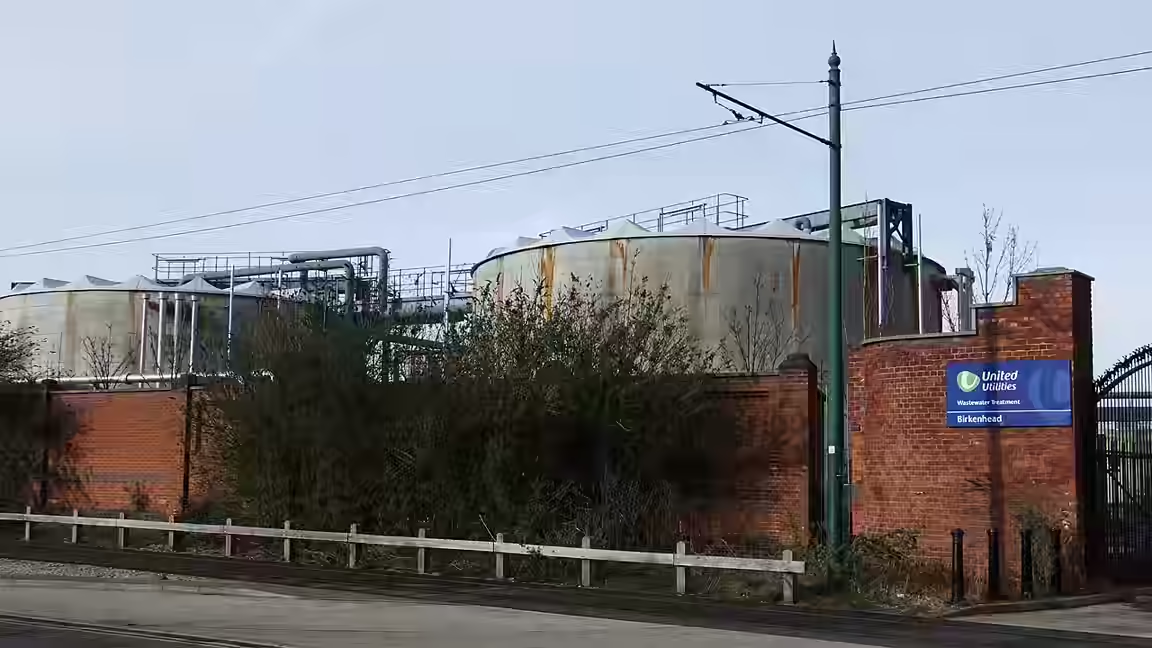
UK water companies earned more than £340 million last year from accepting industrial and commercial wastewater, according to an investigation that assembled what it describes as the first national picture of the trade-effluent system. The reporting raises questions about chemicals entering sewage plants built primarily for biological treatment rather than the removal of many industrial contaminants.
Watershed Investigations, the Guardian and River Action compiled a database of 26,000 trade-effluent consents. Their analysis estimated that up to 608 billion litres of industrial wastewater each year can enter sewage works from sites including power stations, pharmaceutical facilities, food factories, hospitals, abattoirs and waste operations. In England, water companies issue and enforce the consents and are legally required to accept qualifying industrial effluent, though applications can be refused.
The investigation found no central public register and said environmental regulators do not directly oversee the consent process. Many sewage plants use biological treatment that is not designed to remove substances such as PFAS, solvents, pharmaceuticals and flame retardants. Some consent records listed cyanide, chromium, cadmium and mercury. Chemicals that survive treatment can leave in final effluent, while captured contaminants may remain in sludge spread on farmland.
Revenue and volume varied across operators. United Utilities reported £61.6 million in industrial-waste revenue and Yorkshire Water £48.8 million, although the comparison is complicated because those figures included tankered waste while some companies accounted for it elsewhere. Thames Water had the largest permitted volume at 113 billion litres, followed by United Utilities with 105 billion and Severn Trent with 79 billion.
The inquiry also highlighted liquid waste delivered by tanker, including landfill leachate. An Environment Agency officer cited in the reporting described leachate as a major concern because it can contain a mixture of harmful chemicals. Sources identified the Davyhulme and Avonmouth treatment works as large receivers of tankered material and questioned whether sampling regimes can identify every hazardous substance before a load is processed.
Government, regulatory and industry representatives acknowledged parts of the problem while differing over responsibility. The Department for Environment, Food and Rural Affairs said the sector should not profit from pollution and pointed to planned reforms. The Environment Agency said the framework was developed more than 30 years ago, before present concern about PFAS, and that it was working to improve contaminant management.
Water UK said companies in England are obliged to accept trade effluent and that charges are set by Ofwat. It argued that sewers were not designed for several toxic substances and called for restrictions at source and producer funding for removal. United Utilities said it operates consent, monitoring and treatment controls and accepts tankered waste only at specifically permitted sites. The findings therefore document a substantial, poorly visible waste stream while leaving policy makers to decide whether control should rest more heavily with producers, utilities or independent regulators.