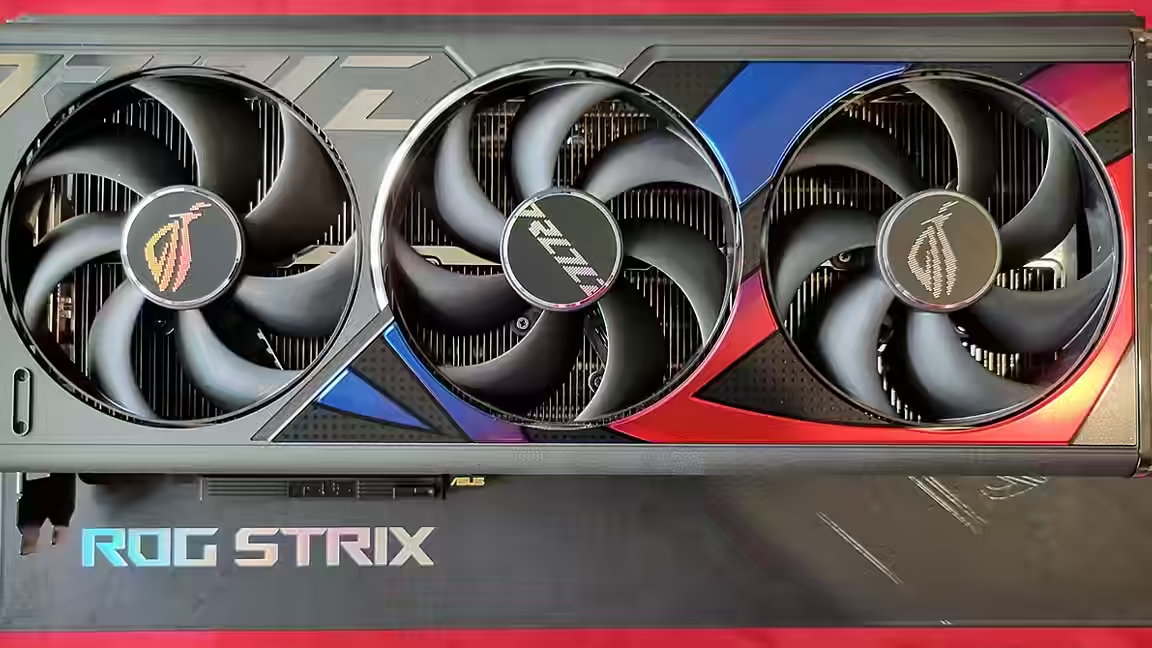
An open-source Linux kernel module is offering owners of several Nvidia GeForce RTX 3000-series graphics cards a way to increase the rate at which their GPUs issue certain floating-point matrix instructions. The project, called gpu-unlock, applies low-level settings before the standard Nvidia driver binds to the card and does not require a patched proprietary driver.
The module targets cards built with Nvidia's GA102, GA103, GA104 and GA106 chips. Its developer says the change doubles the instruction-issuing rate for FP16 and BF16 fused multiply-add operations that accumulate into FP32. Those operations are important in workloads such as large-language-model prefill, image diffusion and FlashAttention. Tasks constrained by memory bandwidth, including much LLM token decoding, and INT8 work should see little change.
Performance evidence currently comes from project users rather than an independent benchmark laboratory. Compatibility reports cited by the repository show LLM prefill improvements ranging from 14% to 36%, while dense matrix-multiplication results vary by card and power limit. The project says comparisons that checked output found identical results before and after the change. Because each report uses its own hardware and benchmark setup, the figures are not directly comparable and should be treated as early field results.
Technically, gpu-unlock combines an existing firmware technique with early loading in the Linux boot process. It writes speed-selector values, resets the GPU and then allows the unmodified Nvidia driver to attach. Packaging is provided for several Linux distribution families, and installation adds the module and its firmware payload to the initial RAM filesystem. Users must explicitly opt in through a kernel command-line parameter; loading the module after the Nvidia driver already controls a card will not perform the change.
The approach also has operational limits. Suspend-to-RAM can reset the selectors, so the module attempts to restore them before Nvidia resumes the cards. Hibernation is not supported. A card that is already bound to another driver, powered down or initialized in an unexpected state is skipped. The display may briefly go blank during reset before the normal graphics driver takes over.
This is an enthusiast modification working below the level of vendor-supported tuning tools. Prospective users should review the code, compatibility list, firmware notices and recovery instructions before putting it on an important workstation. The project is notable because it separates the modification from Nvidia driver updates, but its broader reliability and performance claims still depend on more testing across cards, kernels and real applications.