# EU and partners withdraw branding from Vilnius disinformation conference
The European Union's diplomatic service, Lithuania and Canada withdrew sponsorship or scaled back participation in a disinformation conference in Vilnius after the United States raised concerns about its program, according to reporting by the Guardian. The changes came shortly before the two-day #Disinfo2026 event, an annual gathering organized by the Brussels-based nonprofit EU DisinfoLab.
Logos belonging to Lithuania's foreign ministry, the European External Action Service and Global Affairs Canada were removed from the conference website. Photographs reviewed by the Guardian also showed stickers covering organizational logos on printed event material. The report attributed its account of US contacts with several governments to three people familiar with the matter, including European officials, and to internal US State Department documents.
The dispute centered on a panel that considered the United States as a possible source of foreign information manipulation and interference. The session examined how European researchers and policymakers might approach resilience without Washington. According to the Guardian, US documents welcomed Lithuania's response to American concerns and objected to the panel's framing. Because the account relies partly on unnamed sources and internal documents, the pressure campaign should be understood as reported by the newspaper rather than independently established by NeoTechNews.
The governments involved publicly framed their decisions in terms of disagreement with the event program. Lithuania's foreign ministry said parts of the conference differed from the government's official position. Global Affairs Canada said it reviews outside sponsorship and participation case by case, and that changes to the framing of several discussions led it to revise its involvement. Canadian officials nevertheless continued to attend the conference.
An EU spokesperson confirmed that the European External Action Service withdrew support because some discussions did not align with official EU positions. The Guardian reported that EU funding for the conference continued despite the removal of official branding. The EU's most recent report on foreign information threats identified Russia and China as threat actors and did not characterize the United States that way.
France was also contacted, the newspaper reported, but a French diplomatic source said Paris saw no reason to change its support for civil society. That differing response illustrates the political sensitivity around counter-disinformation work: participating governments may support research and policy development while disagreeing sharply about how an ally is described in a conference program.
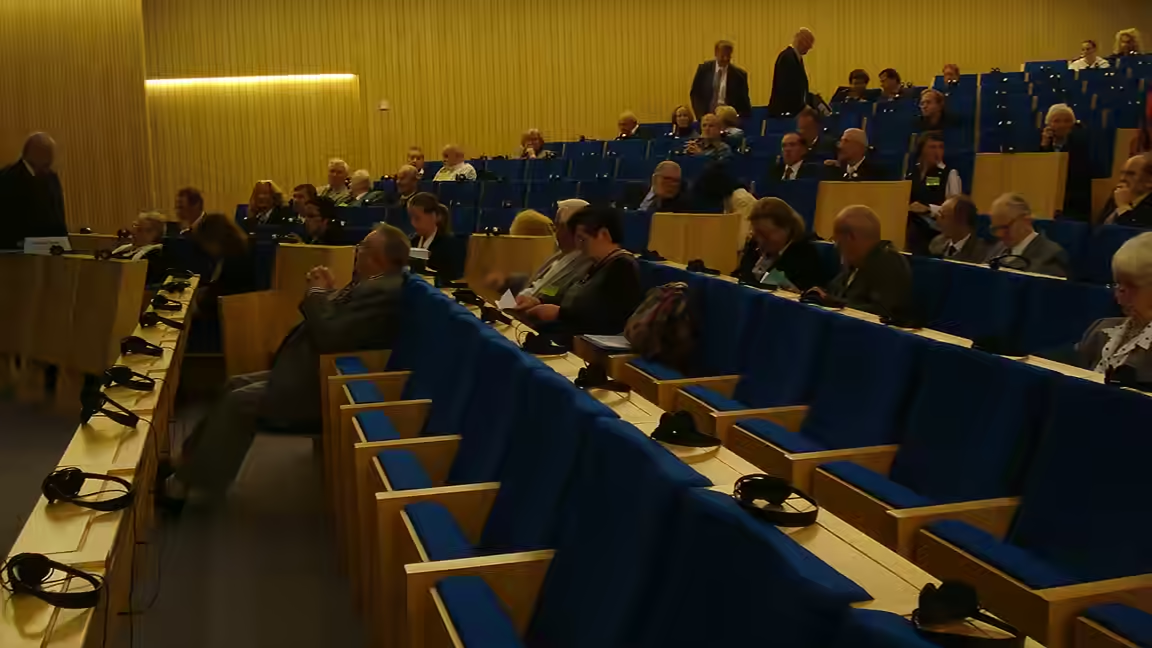
The event brought together researchers, journalists, technologists and policymakers working on information manipulation. Its controversy also exposed tension between US objections to European scrutiny and the independence claimed by civil-society organizers. Nina Jankowicz, a former US official who participated in disinformation policy under the Biden administration, criticized Washington's reported use of diplomatic influence to deter criticism of the US government.
No evidence in the supplied report indicates that the conference itself was cancelled. The immediate result was narrower: visible institutional backing changed shortly before the meeting, while the disputed panel proceeded. The episode leaves open how governments will balance diplomatic relationships with support for independent research when future conferences examine the conduct of allied states.