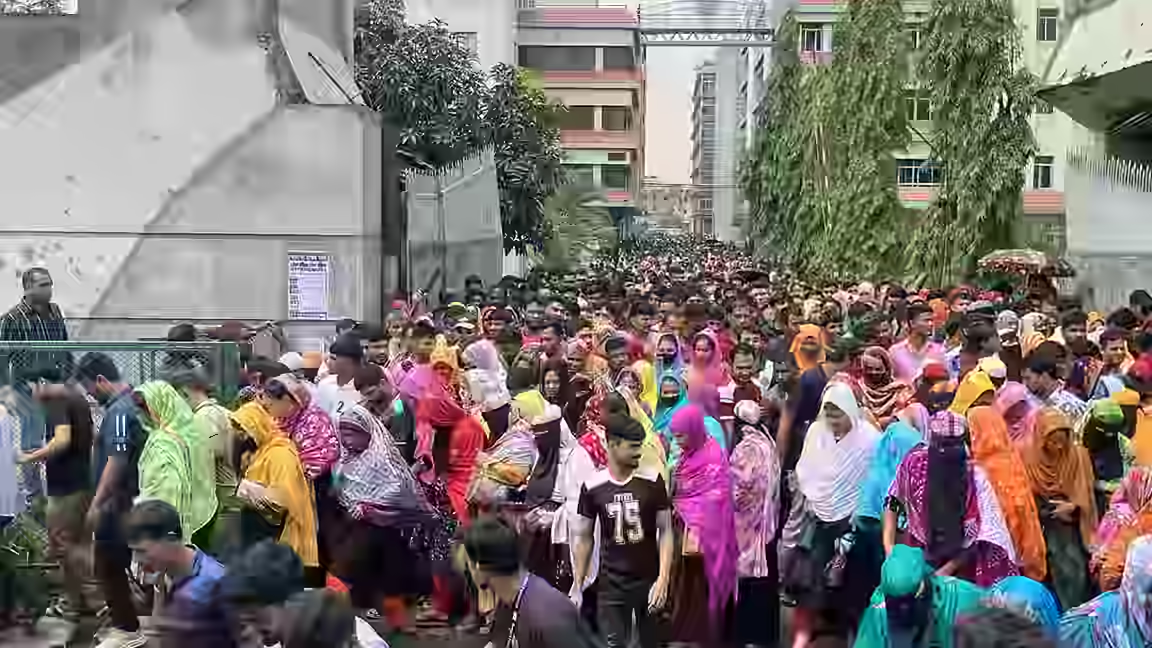
Bangladesh's main garment manufacturers' association has warned that factories disrupted by continuing labor unrest could close indefinitely without pay from November 15. The Bangladesh Garment Manufacturers and Exporters Association said owners would invoke Section 13(1) of the Bangladesh Labour Act 2006 where strikes or unrest prevented production.
BGMEA said 55 factories had been declared closed under that provision by Saturday and production was suspended at 147 units in areas including Savar and Gazipur. The association did not give a final estimate of how many plants could close indefinitely. It warned that roughly 300,000 workers could temporarily lose income if all 147 affected factories remained unable to operate.
The threat follows weeks of worker protests over minimum pay. Garment workers have been demonstrating since mid-October, while a new minimum wage board formed on November 1 has held two meetings. The Business Standard reported that workers had demanded a monthly minimum of Tk30,000, while their representative on the wage board proposed Tk32,000 at a November 9 meeting.
Factory owners had not submitted their figure at that meeting. BGMEA said it would attend the board's November 16 session and present a proposal, despite reluctance among some members. The association left open whether it would participate in later talks, saying that decision would depend on conditions around the factories.
BGMEA president Mahmud Hasan Khan described closures as necessary where security and production could not be maintained. His account represents the employers' position in an active labor dispute. The packet does not contain a response from worker representatives to the proposed no-work-no-pay closures, so their view on that measure remains unreported here.
The disruption has already affected traffic and factory operations. Workers blocked the Dhaka–Tangail highway in Gazipur's Kaliakair area on Saturday amid a rumor that a worker injured in an earlier clash had died. Police later dispersed the protesters and restored traffic, according to The Business Standard.
Manufacturers also face commercial pressure from delayed shipments. BGMEA officials said some factories had been unable to operate normally for seven to 12 days. Missed deadlines can force suppliers to use far more expensive air freight or risk cancellations, shifting extra costs to factory owners. One association vice-president said a buyer had requested that part of an order be sent by air and another part deferred.
The immediate test will be whether factories reopen and whether the wage board can narrow the distance between workers' demands and an owner proposal. Indefinite closures would increase pressure on employees through lost wages while also extending the production shock for Bangladesh's largest export industry.