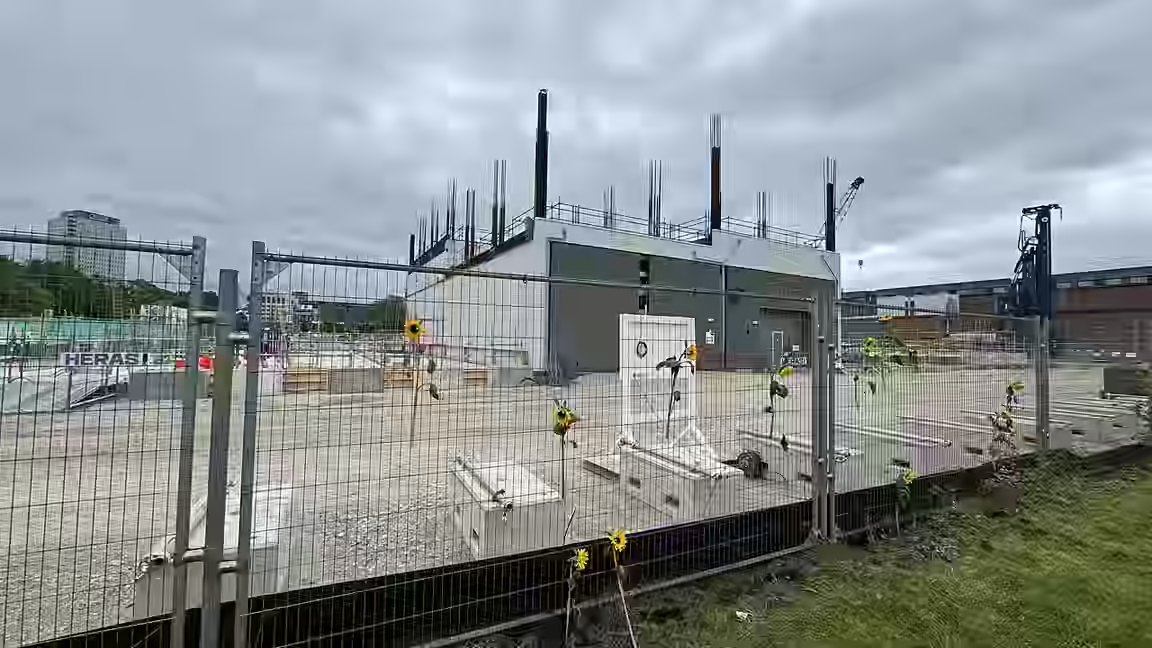
Dutch police detained between 150 and 200 people after activists entered and occupied the construction site of a Microsoft data centre in Amsterdam, part of a wider series of European demonstrations against expanding digital infrastructure.
Several hundred protesters gathered at the site in the Sloterdijk district on Friday. Some climbed a crane and set off flares, while police moved to remove people from the property. Officers said those detained were suspected of trespassing. Some demonstrators remained at the site into late afternoon as others were escorted away.
The action followed a two-day call for protests against data centres across Europe. Campaigners argue that rapid construction of facilities supporting cloud computing and artificial-intelligence workloads is proceeding without sufficient public consultation or environmental oversight. Their objections centre on the large amounts of electricity, computing equipment and water associated with such facilities.
Geef Tegengas, a Dutch group whose name translates as Push Back, said the occupation was intended to stop construction. Pro-Palestinian activists also participated. Demonstrators linked their opposition not only to resource consumption but also to wider objections over surveillance, warfare and uses of artificial intelligence. Those were campaign claims rather than findings by police.
Microsoft said it knew about the demonstration and respected peaceful expression, while rejecting unlawful conduct or actions that could endanger people. The company did not announce a change to the Sloterdijk project in response to the occupation.
The Amsterdam action was one of several planned under the banner “Stop Dirty Data Centres.” Organisers said groups in 15 European countries would participate on Friday and Saturday. Smaller demonstrations took place near a data centre outside Berlin and in front of Poland's parliament, where communities from areas around Warsaw opposed planned facilities. Italy's Lombardy region has also become a focus for grassroots resistance as its data-centre industry grows.
Organisers described the events as a coordinated two-day mobilisation, so the occupation formed part of a planned campaign rather than an isolated encounter at one site. The number of people detained was reported as a police range, not a final count.
The protests show how data centres have become a political issue beyond the technology sector. Developers present them as essential infrastructure for cloud services and AI, while opponents increasingly ask who bears their local environmental costs and how building decisions are made.
In Amsterdam, the immediate result was a large police operation and mass detentions rather than any announced change in construction. The legal status of individual detainees was not detailed beyond police suspicion of trespassing, and no conviction should be inferred from detention.