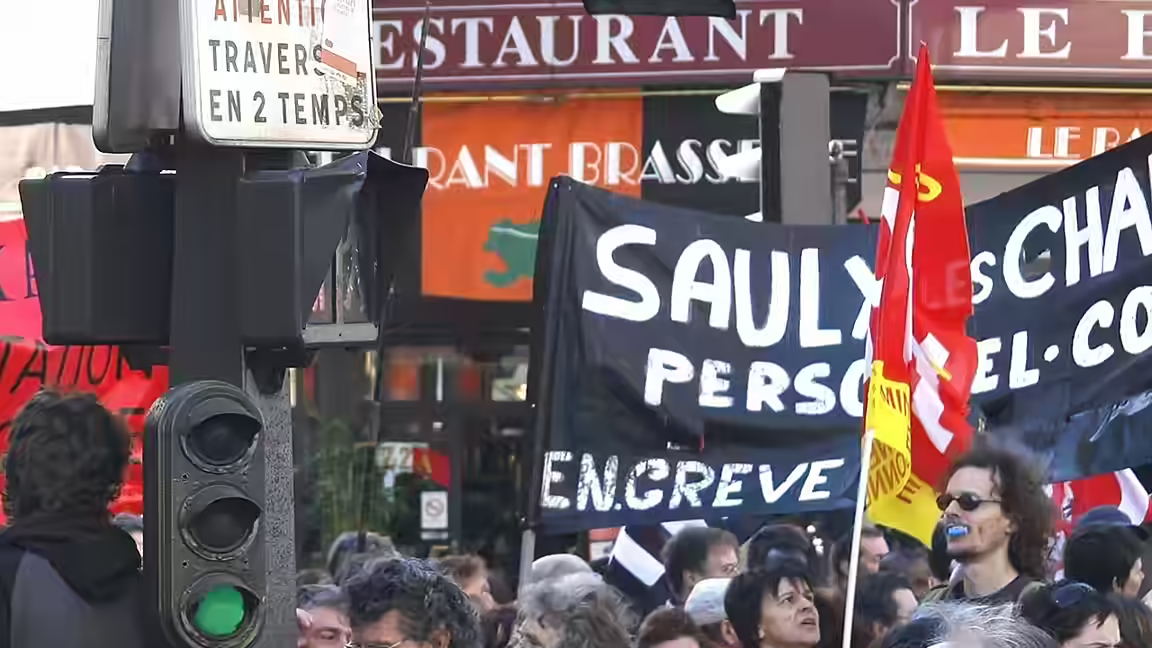
Thousands of people marched in Orléans against a congress held by Marine Le Pen’s National Rally, as the far-right leader used the gathering to advance her campaign to succeed President Emmanuel Macron. Police estimated the counter-demonstration at 11,000 participants, while organizers put attendance at 26,000.
The march brought together a broad coalition of about 50 organizations, including labor unions, left-wing political parties and student groups. Demonstrators criticized both Macron and Le Pen, reflecting opposition to the current government as well as to the nationalist, anti-immigration platform of National Rally. French media reported that the Orléans procession concluded peacefully early in the afternoon.
The party congress was expected to continue through Sunday. It took place six months before the scheduled presidential election, with Le Pen presented in contemporary polling as a leading contender. The counter-march therefore served not only as a protest against a party meeting but as an early public response to the approaching campaign.
Some placards referenced a recent shooting in Trappes, a suburb of Paris, which left one person dead and several others injured across multiple locations. Macron had described that attack as racist terrorism, and prosecutors were investigating it as a terrorist incident. The references connected the Orléans demonstration to wider arguments over racism, political violence and the direction of French public life.
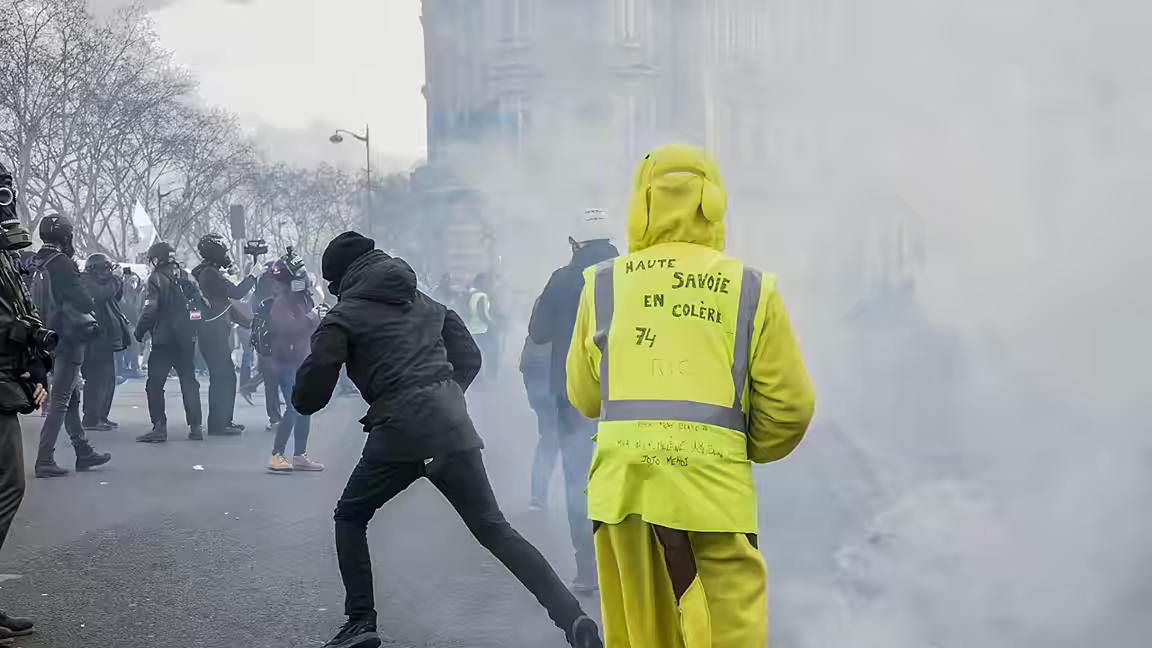
The peaceful event in Orléans unfolded during a much larger day of protest across France. Separate demonstrations over the cost of living and education drew an Interior Ministry estimate of about 410,000 participants nationwide, while union organizers claimed roughly 800,000. Late clashes in Paris and other cities led to extensive arrests, but the supplied reporting did not connect the Orléans counter-demonstration to that violence.
That distinction matters because the day combined several movements and grievances rather than a single unified campaign. Orléans centered on opposition to National Rally and Le Pen’s presidential ambitions; marches elsewhere focused primarily on purchasing power, schools and public services.
The attendance estimates in Orléans differ by more than two to one, and neither can be independently resolved from the available evidence. Both nevertheless indicate a substantial mobilization around the congress. Its peaceful conclusion contrasted with confrontations later reported at other demonstrations, giving opponents of National Rally a visible but orderly platform at the opening stage of France’s election season.
The congress and counter-demonstration also tested whether campaign activity could proceed amid an exceptionally tense national protest environment. Police turnout estimates and organizer claims offer different measures of scale, but the absence of reported disorder in Orléans was a significant part of the event’s immediate outcome.