Authorities in Liège announced a citywide restriction on gatherings after student demonstrations were followed by property damage, a burning bus shelter and clashes in the city center.
The order, announced on the event date of October 7, 2026, bans gatherings of more than three people from 6 a.m. the following day. Mayor Willy Demeyer said the measure was intended to protect residents, students, businesses and other people using the city. The ordinance includes exemptions, although the supplied report did not detail all of them.
Hundreds of pupils and students demonstrated in Liège and other Belgian cities as part of action against education policies associated with minister Valérie Glatigny and against higher prices for TEC public-transport subscriptions. Protesters also called for better study conditions and broadly accessible education. Their mobilization followed action by teachers against government education reforms and reflected similar student activism in France.
In Liège, tensions increased during the afternoon around Place de la République Française and Place Saint-Lambert, where several hundred young people had gathered. Paving stones were thrown at shop windows and public buildings, including the Fnac store, Galeries St-Lambert and provincial premises, according to RTBF.
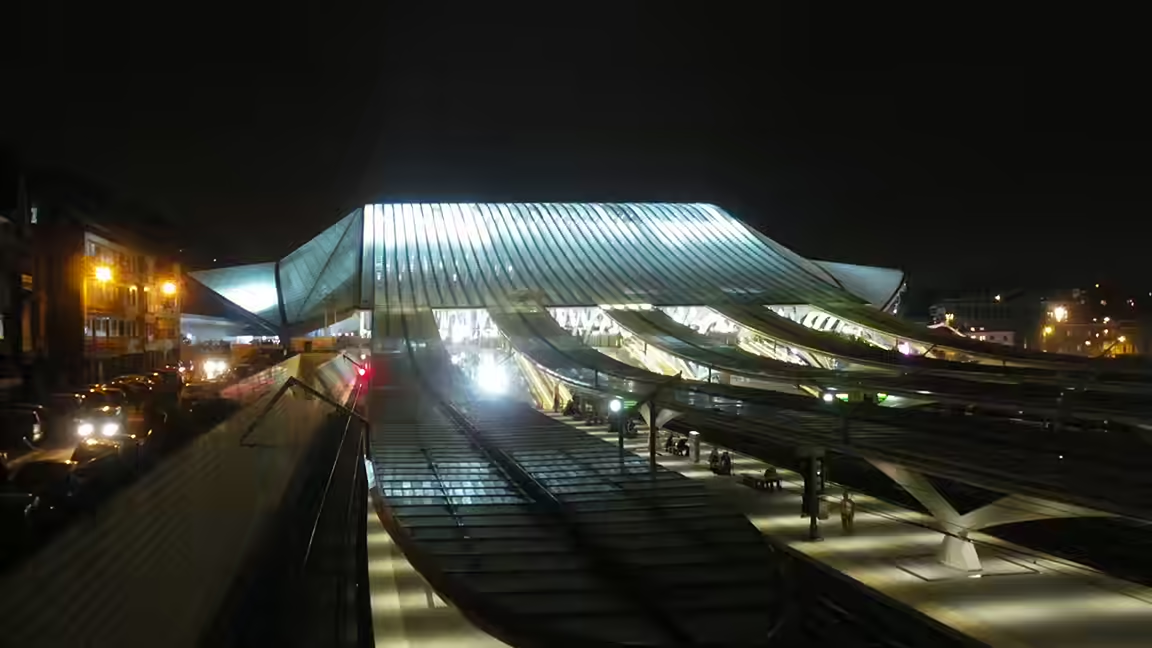
A bus shelter was set on fire. Police used tear gas to disperse people in the area and enable firefighters to intervene. The city sent a BE-Alert message advising retailers to close, while Liège-Guillemins railway station was temporarily shut as authorities responded to the disorder.
The unrest came on a second consecutive day of tension connected with the earlier protests. The municipal response broadened the immediate focus from policing individual trouble spots to limiting group activity throughout Liège.
The distinction between the wider student campaign and the people responsible for damage is important. The supplied evidence describes a large mobilization around education and transport costs, followed by disorder involving some people in the city center; it does not establish that all demonstrators participated in violence or vandalism.
The temporary station closure and shop warnings illustrate the disruption beyond the protest sites. Liège-Guillemins is the city’s main rail hub, while the affected central squares sit in a busy commercial and administrative district.
Officials’ next challenge will be enforcing the gathering restriction without obscuring the grievances that brought students into the streets. The immediate priority, according to the mayor’s statement, is public safety. Further details on arrests, injuries or the duration of the ordinance were not included in the supplied report.
The timing of the restriction, beginning early Thursday, indicates that officials expected the risk of renewed gatherings to continue beyond Wednesday evening. Its citywide scope is wider than the two central squares where the most serious incidents were reported. That breadth may become a point of scrutiny as authorities balance freedom of assembly with the need to prevent further damage. The evidence available does not say how long the measure will remain in force or how exemptions will be administered.