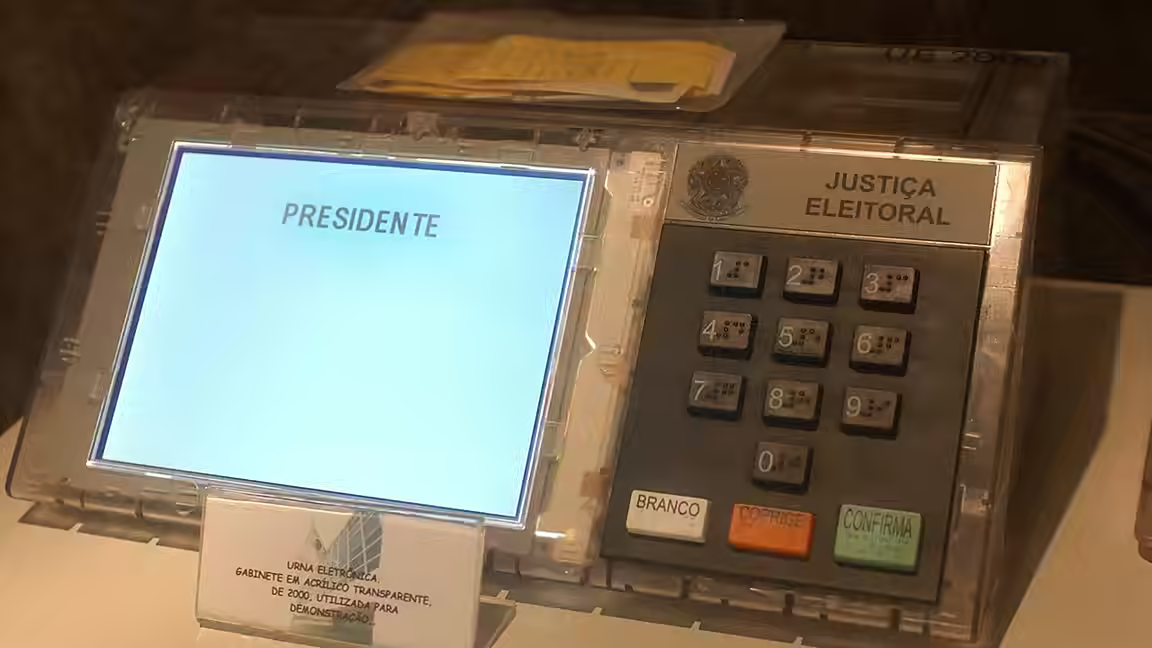
Voting closed in Brazil’s first-round presidential election on October 4 after a closely fought campaign between the leftwing incumbent, Luiz Inácio Lula da Silva, and far-right Rio de Janeiro senator Flávio Bolsonaro. The ballot also covered every seat in the 513-member Chamber of Deputies, 54 of the Senate’s 81 seats, state legislatures and 27 governorships.
Early partial results did not settle the contest. With almost 65 percent of the country counted, Bolsonaro was reported at 49.8 percent and Lula at 42.25 percent, while several other candidates remained in single digits. The figures were incomplete and could change as additional regions reported. A candidate needs more than half of valid votes to win in the first round; otherwise, the two leading candidates proceed to a runoff scheduled for October 25.
Lula, 80, is seeking a fourth non-consecutive term. Casting his ballot in São Bernardo do Campo, the industrial city central to his political rise, he framed the election as a choice over Brazil’s democratic direction. His campaign has emphasised social programmes, economic indicators and protection for Indigenous communities and the Amazon, while also confronting allegations involving his son and a former aide. Those allegations remain under investigation.
Bolsonaro, 45, sought to consolidate voters from other rightwing candidates around his campaign. He is the son of former president Jair Bolsonaro, who lost narrowly to Lula in 2022 and is serving a 27-year sentence for attempting a coup after that defeat. The younger Bolsonaro’s candidacy inherited much of his father’s political base after the former president selected him over other potential conservative standard-bearers.
Foreign policy also featured in the campaign. Flávio Bolsonaro has repeatedly praised United States President Donald Trump and promised to join a US-led campaign against drug cartels. Lula has portrayed himself as willing to resist pressure from Washington and accused Trump of trying to influence Brazil’s vote in his opponent’s favour. The supplied reporting does not establish that the allegation was independently proven.
Both leading campaigns carried vulnerabilities. Bolsonaro faced scrutiny after he was recorded seeking money from a banker accused of corruption to finance a film about his father. Lula continued to face substantial voter rejection despite favourable social and economic measures, while wider controversies involving the Supreme Court contributed to anti-establishment sentiment.
The count will determine whether either candidate clears the first-round threshold or whether Brazil enters three more weeks of campaigning. Because the same ballot reshapes Congress and state governments, the results will also define the governing coalition and institutional constraints awaiting whoever wins the presidency.